Designing Data Governance Dashboards

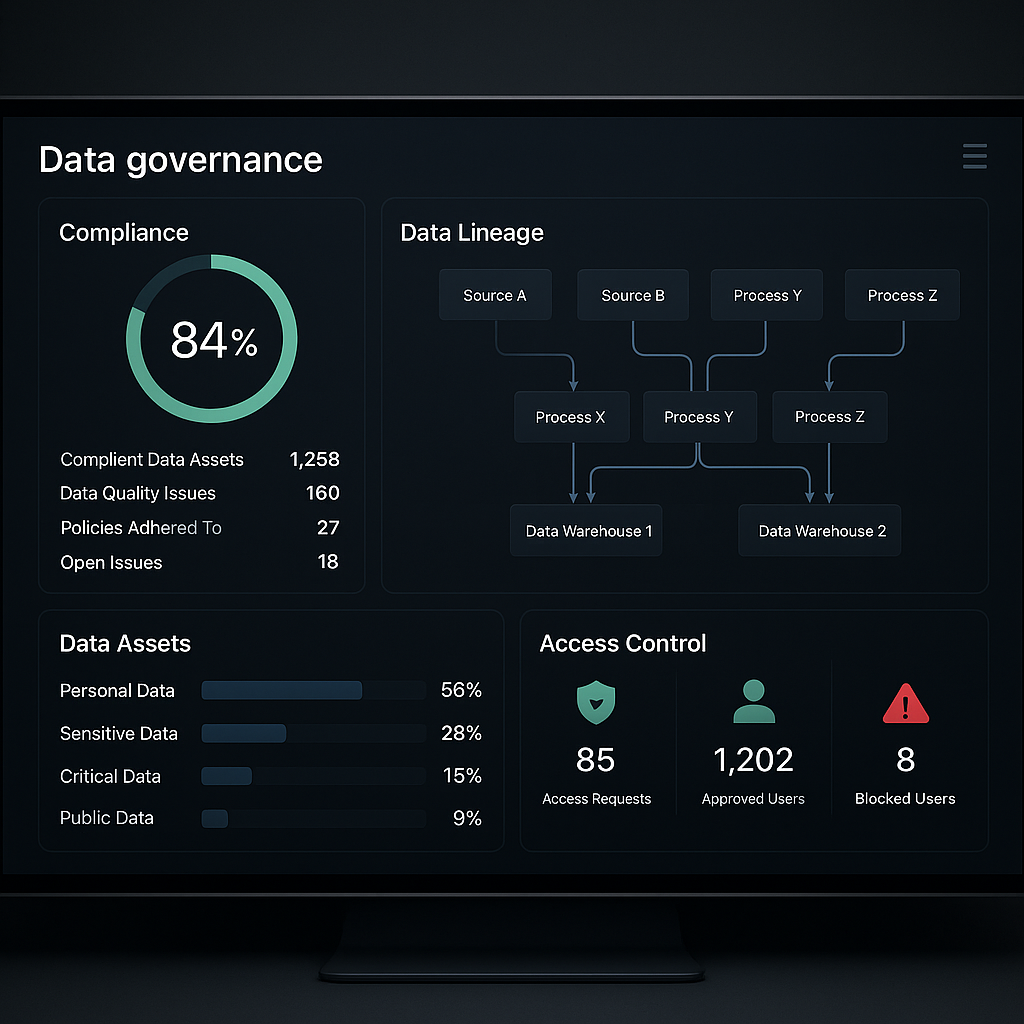
Enterprises run on data, but without visibility and control, information becomes fragmented and unreliable. A well-designed data governance dashboard turns this complexity into clarity. It gives decision-makers a transparent view of how data is collected, stored, and used across the organization, helping them maintain compliance and make informed choices.
Designing such dashboards begins with understanding their audience. Executives, compliance officers, and data engineers all look at the same system from different perspectives. A successful interface presents information in layers. Executives see summaries and key compliance metrics, while technical users can drill into lineage, access controls, and data quality reports. This approach balances simplicity with depth, keeping the dashboard accessible without oversimplifying critical details.
Clarity is the defining principle. Data governance dashboards must make intricate systems understandable at a glance. Visual hierarchy, consistent color coding, and intuitive grouping of metrics help users navigate complex datasets confidently. Features like interactive filters and audit trails improve transparency by letting users trace data sources and transformations without leaving the interface.
Trust and compliance are at the heart of governance design. Regulations such as GDPR and HIPAA require clear accountability. Dashboards should surface data ownership, consent status, and retention timelines in a way that is easy to verify. Visualizing compliance progress not only supports audits but also builds confidence among stakeholders who depend on that data to operate responsibly.
Performance is another essential factor. Governance tools often process large volumes of information. Interfaces must remain responsive and avoid visual overload. Prioritizing the most relevant insights keeps the dashboard actionable and ensures that users can find what they need quickly, even in high-pressure scenarios.
Scalability matters too. As organizations grow, data environments expand. A modular architecture allows teams to integrate new systems or compliance frameworks without redesigning the dashboard from scratch. This flexibility supports long-term governance maturity and continuous improvement.
Designing data governance dashboards is about more than compliance. It is about building systems that make data trustworthy, understandable, and actionable. When designed with clarity and accountability in mind, these tools become the foundation of ethical and intelligent enterprise operations.