Enterprise AI Adoption Strategy

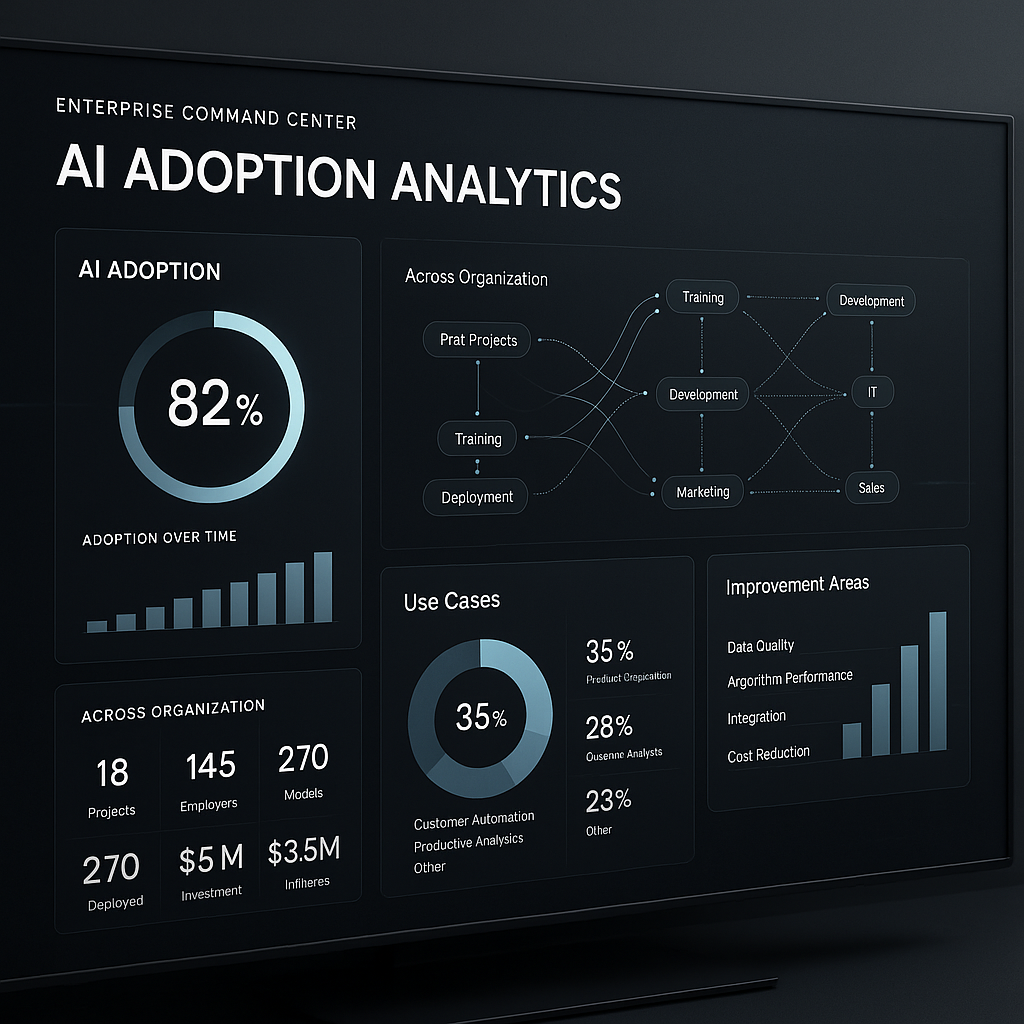
Artificial intelligence is no longer a futuristic experiment. For enterprises, it has become a strategic necessity that shapes decision-making, operations, and customer experience. Yet adopting AI successfully requires more than deploying algorithms. It demands a clear roadmap that connects technology with business outcomes.
An effective enterprise AI adoption strategy begins with defining purpose. Too often, companies start by selecting tools instead of identifying the problems they want to solve. AI should serve measurable goals: automating repetitive workflows, improving forecasting accuracy, enhancing personalization, or uncovering insights hidden in vast datasets. When intent drives investment, adoption follows naturally.
Data readiness is the next hurdle. AI thrives on clean, structured, and reliable data. Enterprises need systems that unify information from multiple departments and maintain strict governance. Building this foundation often takes more effort than developing the models themselves, but it ensures results that are accurate and explainable rather than opaque and inconsistent.
Cultural readiness matters as much as technical capability. Employees must trust the systems that assist them. Training, transparency, and internal communication help teams understand that AI is a tool for empowerment, not replacement. Enterprises that overlook this human factor face resistance, shadow processes, and missed opportunities for collaboration between people and machines.
Governance and ethics must anchor every stage of implementation. As AI begins influencing hiring, pricing, and customer decisions, oversight prevents bias and ensures accountability. Enterprises should define policies that explain how models are trained, what data they use, and how their outputs are reviewed. This clarity builds credibility with regulators and customers alike.
Finally, successful adoption is iterative. AI systems improve through feedback and usage. Continuous monitoring, performance evaluation, and model retraining keep outputs relevant as markets shift. Companies that treat AI as a static product soon find themselves chasing competitors that see it as a living capability.
Enterprises that build AI adoption around purpose, data, culture, and governance move faster and scale sustainably. The reward is not just automation or efficiency but a smarter organization that learns and adapts in real time — one that uses AI not to replace human judgment but to amplify it.